
Moving safely
Help with transfers, hoisting, standing and walking, using the equipment you already have and the techniques your therapist has set.
Whether your needs are lifelong, or you are recovering after an operation or a stay in hospital, the goal is the same: to keep doing as much as you can, for as long as you can, in your own home.
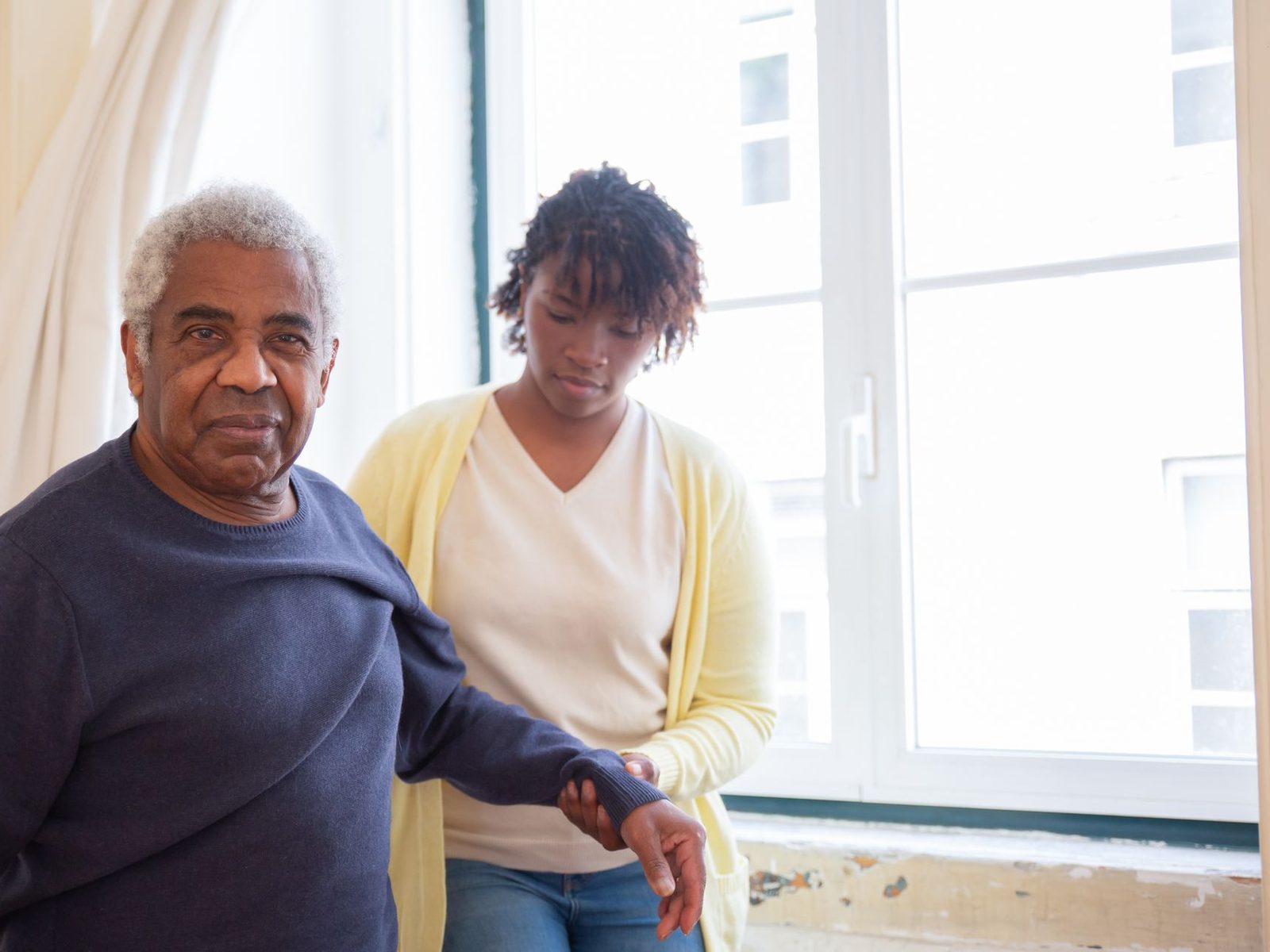
Illustrative photograph
Built around your goals
A physical disability does not tell us what you need. Two people with the same diagnosis can want completely different things: one wants to get back to cooking, another wants to be able to reach the bathroom unassisted at night, a third mainly wants the washing up to stop piling up.
So the first visit is a conversation, not an assessment form. We ask what you want to be able to do — and then we work backwards from that to the hours, the equipment and the training your carers need.
Where you are already working with a physiotherapist, occupational therapist or reablement team, we follow their programme. We are there to make the exercises happen on the days they are not.
How we can help
Help with transfers, hoisting, standing and walking, using the equipment you already have and the techniques your therapist has set.
Washing, dressing, bathing and continence care, delivered in a way that keeps your dignity intact and your preferences respected.
Appointments, shopping, work, college, or simply a change of scene — with somebody trained and insured to help you travel.
Meals, laundry, cleaning and errands, so that the practicalities of daily life stop being the thing that wears you down.
Prompting, administering and recording medication, and collecting prescriptions before you run out rather than after.
Waking or sleeping night care for people who need help in the small hours, or whose family cannot safely provide it.
After hospital
The first fortnight after a discharge is when things most often go wrong. We can be in place on the day you get home, with a plan that builds down as you build up.
With your consent we speak to the hospital discharge team so we know what has changed, what equipment is coming, and what the therapy plan is.
More hours, more hands, more supervision — the period when confidence is lowest and the risk of a fall or a missed medication is highest.
As you regain ground we reduce the support, review the plan with you, and stay on hand for the days that are harder than others.
Funding and assessmentsIf you are being discharged from hospital, you may be entitled to a period of free reablement care arranged by the NHS or your local authority, and to a Care Act assessment. We are happy to explain how this works and how our service fits alongside it — but the assessment itself is yours to request, and it is free.
Read next
When needs are high enough that visits are not enough, a carer can live with you.
Explore live-in care →Personal, social and domestic care at home, and how a plan is built around you.
See our services →Who we are, how we are regulated, and the registrations you can check yourself.
About Integrated Support Services →Let's talk
Start there, and we will tell you honestly whether we are the right people to help you get there.